People get stuck between two pieces of advice: “socialize early” and “keep them safe until vaccinated.” This guide explains how to do both for puppies, adult dogs, and rescue dogs, with practical risk management that actually makes sense.
“Socialize early” and “keep them safe until they’re vaccinated” can sound like conflicting advice. It’s not. Socialization teaches a dog the world is predictable and safe. Vaccination gives the immune system the protection to survive exposure to that world. The problem isn’t the advice. The problem is when people treat socialization as unlimited access to public dog spaces, regardless of what a dog is actually protected against.
Remember: Vaccines don’t just protect individual dogs, they prevent outbreaks that cost lives.
Every social decision you make for a dog assumes something about immune protection. When that assumption is wrong, risk increases. Sometimes dramatically. This is true for puppies. It’s true for adult dogs. And it’s especially true for rescue dogs with unknown history.
Puppies are in a critical learning window early in life, but they’re not fully protected right away. They receive temporary antibodies from their mother, and those antibodies fade at different rates. That’s why puppies receive a vaccine series rather than a single shot. The parvo protection most people think of lives inside the DA2PP/DHPP series. Puppies aren’t considered reliably protected until they complete that series, with the final booster at or after 16 weeks (your veterinarian may tailor this to local risk and the puppy’s history).
No. Some vaccines provide long-lasting immunity after the initial series and boosters. Others require more frequent updates depending on lifestyle and local disease risk. Core vaccines (like distemper, parvovirus, and adenovirus) follow a series plus boosters, then many dogs transition to longer intervals. Rabies boosters follow legal requirements. Lifestyle vaccines (like leptospirosis, bordetella, and sometimes canine influenza) depend heavily on where your dog goes and what they’re exposed to.
The simplest way to think about it is this: puppyhood is building the foundation. Adulthood is maintaining it. Your vet can help you choose the right schedule for your dog’s actual life.
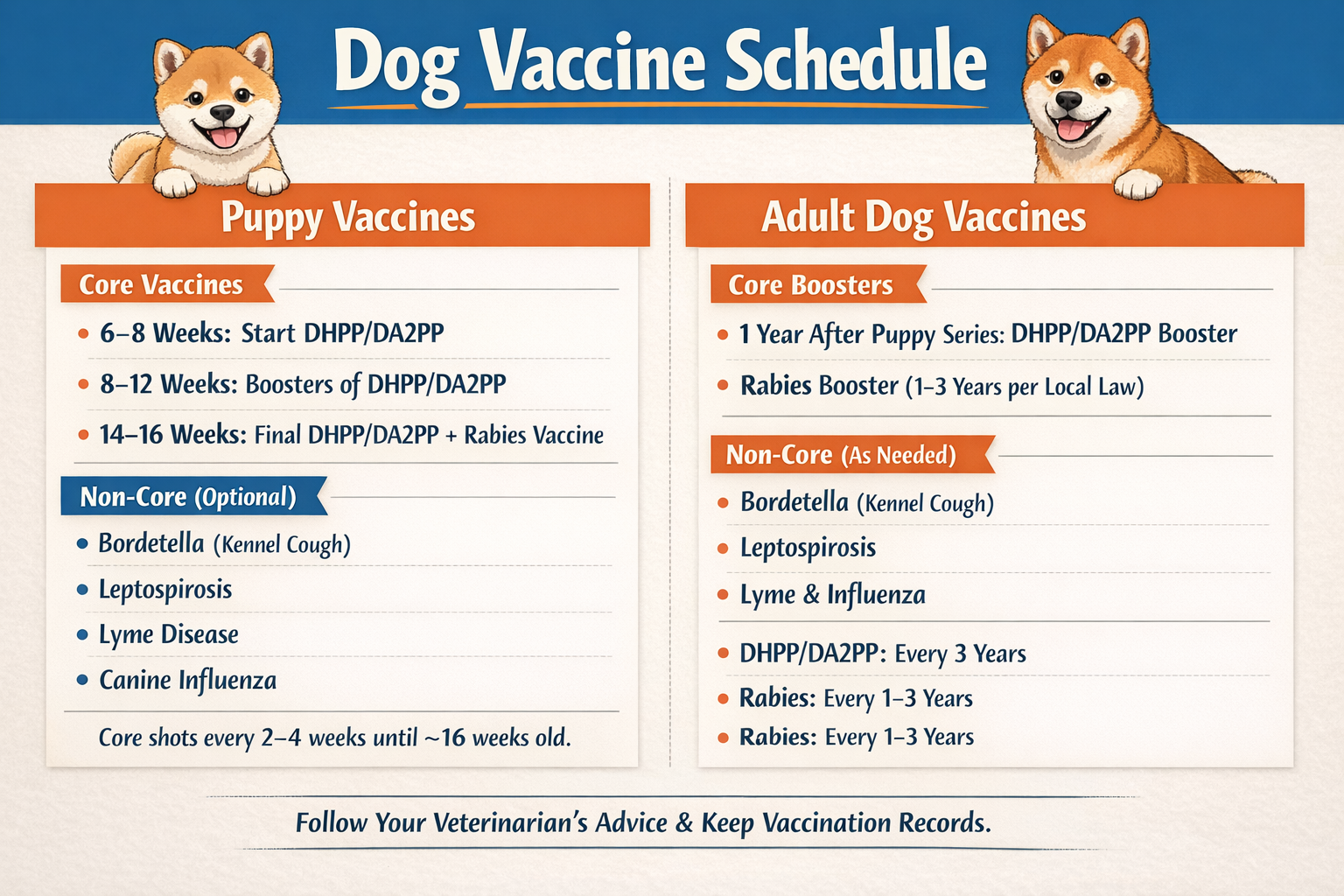
Vaccines don’t just protect individual dogs; they reduce outbreak momentum and prevent severe, resource-heavy illness.
Rescue dogs often arrive with unknown vaccination history, interrupted schedules, and exposure to high-density environments. Even adult rescues should be treated cautiously until vaccination status is confirmed and updated. If there is no documentation, reputable rescues and veterinarians generally treat the dog as functionally unvaccinated until proven otherwise. This is not fear-based. It’s reality-based.
Yes. Adult dogs still learn. Rescue dogs in particular may be learning what safety feels like for the first time. Adult socialization should be calm and intentional: predictable experiences, gentle handling practice, controlled exposure to new environments, and positive association building. It does not need to be chaotic to be effective.
Dog parks concentrate unknown dogs, unknown vaccine compliance, and environmental contamination. Diseases like parvovirus don’t require direct contact. They can spread through microscopic fecal contamination, and they can persist in soil and on surfaces for long periods. That’s why under-vaccinated dogs, newly adopted rescues, and immunocompromised dogs should avoid these environments even if they “seem fine.”
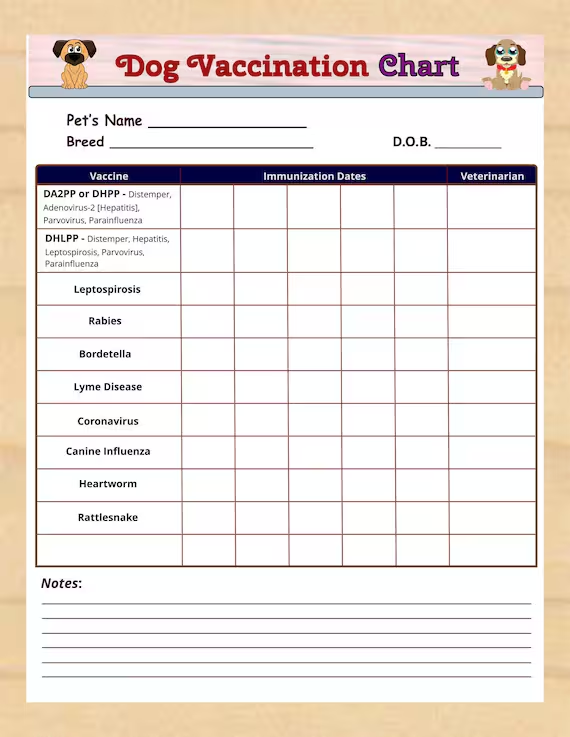
Download & print this vaccine record (PDF)
Under-vaccinated puppies and newly rescued dogs are the most vulnerable. Choose controlled socialization over convenience.
A common worry is that boosters or catch-up vaccines are excessive or harmful. For the vast majority of dogs, appropriate vaccination is far safer than leaving protection incomplete. The immune system is designed to respond to repeat exposure. Modern vaccines are also more targeted than many people assume. If your dog has a specific health condition or history of reactions, your veterinarian can customize a plan.
Responsible vaccination and socialization are not rigid rules. They’re informed choices. Know your dog’s status, understand where immunity is solid and where it is not, and match exposure to reality, not hope. For rescue dogs, add time and decompression. For puppies, choose controlled environments and avoid high-traffic dog spaces until the series is complete.
Vaccination isn’t something dogs “finish” and forget. It’s a foundation that supports everything else you do with them. Puppies need protection while they learn. Adult dogs need maintenance based on real exposure. Rescue dogs need caution, updates, and time.
If you’re unsure whether an activity is appropriate for your dog, ask one question: Is this decision based on convenience, or on what my dog is actually protected against?
Written by Shannon, Founder of Shiba Saviors™.